Tuesday, April 25, 2017

The Kobold Guide to Board Game Design (Various)


In The Kobold Guide to Board Game Design, various industry insiders (including Richard Garfield, Steve Jackson, and others) present a series of essays on various game topics, grouped into four sections: concepting, design, development, and presentation.  A wide range of topics is presented, including things like how to get your game published.  Below are some thoughts I found valuable and worthy of presentation.

What is a game?
"A game is an interactive mathematical system, made concrete, used to tell a story."  In this definition,
interactive mathematical system = rules
made concrete = components
story = theme

Reasons for playing games
Broadly speaking, we play games for socialization, the challenge, and as a hobby.  Additionally, we want to be part of a story- participating in what happens, even if we aren't victorious.

Characteristics of games
Games should be or have:

  • fun
    • Part of this is having (and understanding) options without knowing for certain the correct solution.
  • a compelling theme
    • You should want to play.
  • immersive
    • Players are participating in a story and should feel as such.
  • well-paced
    • Using the story analogy, a game should have three acts and be paced appropriately:
    • The first act draws the battle lines.
    • The second is the meat of the game.
      • don't kick a player out before the game is over, and don't overly reward the leader.  If players have certainty of defeat, the fun is diminished.
    • The third is the push for victory.
      • include 'inherent deceleration'- make it harder to win as the finish line approaches.
  • intuitive
    • Metaphor (theme) and mechanics (rules) should be present and harmonious.
    • After all, a game without mechanics is a story or thought experiment.  A game without a metaphor is a math problem or puzzle
  • interactive
    • Players should be have some degree of influence in others' activity (but not too much)
  • simple
    • Which includes being easy to learn and quick to set up (called "immediacy of play").
  • strategy
    • Making meaningful decisions, potentially given limited information
    • You want to have interesting decisions.  Ones that are easy to make, but not with obvious solutions.  (You can do this using randomizers like dice rolls.)
  • luck
    • Something beyond anyone's control, giving everyone a chance regardless of good (or bad) decisions.  This also mimicks the unpredictable reality of life, granting an element of the unknown that is both mystifying, maddening, and satisfying.
  • replayable
    • Even if you're quite skilled (which allows you to know the correct choice in a given situation), provide many paths to/strategies for victory.

Writing good rules
Rules are extremely important- and layout of the rule book is, too.  Michelle Nephew recommends the following layout:
Overview, Components, Setup, Gameplay, Card types (if applicable), Endgame or winning condition, Examples/hints/optional rules & variants, Glossary, Credits

General tips on designing and publishing
If you want to design a game, play lots of them.  The experience will hone your own design abilities and help guide your approach.

If you want to publish a game, you must be prepared for every aspect.  Make the prototype professional (without going overboard- it will get changed as part of the development process).  You should playtest MANY times in different audiences.  The rules need to be solid.  You should know your game, know your audience, know what publishers to approach, understand the publishing process, and more.  You should understand that it is not just your game- you will require a team of diverse perspectives to bring out its full potential.


Review
This book is a mixed bag.  There's a lot of good information in it, and I particularly enjoyed the discussion on strategy vs. luck.  On the downside, some of information presented is obvious.  The writing varies and is generally sub-par.  The book could be condensed to an essay (like I summarize above) without loss of content.  It's a quick read, so it's not bad . . . but I suspect (or hope?) there are better out there.

Rating: B-

Sunday, April 23, 2017

Jesus & the Old Testament

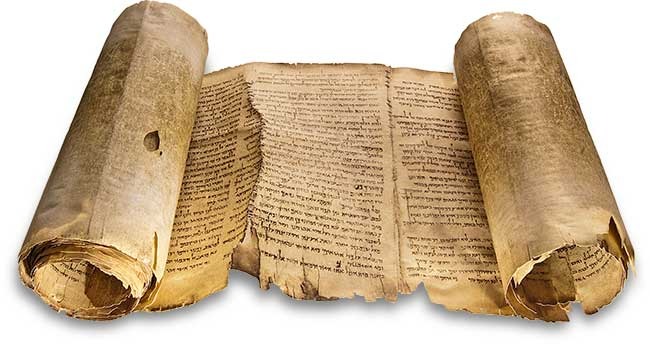
image from here
Throughout Christianity's history, numerous people (within and without the Church) have argued that the God in the Old Testament (OT) is markedly different from the God in the New Testament (NT).  The claim, simplified, is that "God in the OT judged and punished; Jesus in the NT loved and forgave."  This has led some people- who believe in Jesus- to reject the OT altogether.  We see it first in history with Marcion, who felt Jesus' teaching was incompatible with the OT.  Marcion wanted to throw out the OT altogether, and there are Christians today who agree with him.  But what does the Bible itself say?

Jesus is the fulfillment of the OT (Luke 24:44-48).  It's therefore not surprising that we see Him appeal to it regularly during His ministry.  In the NT, we see the direct words of Jesus in the four Gospels (Matthew, Mark, Luke, John).  Some versions of the bible put His words in red.  You can skim all four Gospels in an afternoon, and it is remarkable how many times Jesus refers to the OT.  He quotes specific passages, mentions personalities and events, and refers the collection as a whole (calling it "the scriptures" or "the law and the prophets," two of the OT's traditional divisions).  My list below summarizes these references.

Matthew
  • Jesus quotes passages found in Genesis (1 time), Exodus (6 times), Leviticus (3), Deuteronomy (8), Psalms (5), Hosea (2), Malachi (1), Zechariah (1), Isaiah (3)
  • Mentions “law and prophets” at least 3 times
  • Mentions Abraham, Isaac, Jacob, Elijah, Sodom, David, Jonah, Nineveh, Solomon, Isaiah, Moses, and Abel
  • Says things like 
    • “have you not read?”, “you know neither the Scriptures nor …”, “scriptures be fulfilled”
Mark
  • Quotes passages found in Genesis (2), Exodus (2), Leviticus (1), Deuteronomy (2), Psalms (3), Isaiah(2), Zechariah (1)
  • Mentions Moses, David (priest-food situation), Abraham, Isaac, Jacob
  • Says things like
    • “have you not read this Scripture”, “it is written”, “But let the Scriptures be fulfilled” (14:49b)
Luke
  • Quotes passages found in Exodus (1), Deuteronomy (4), Isaiah (4), Malachi (1), Psalms (3)
  • Mentions Elijah, Elisha, Moses, David, Jonah, Solomon, Lot, Noah, Abel, Abraham, Isaac, Jacob
  • Says things like
    • “it is written” or “said” (6 times)
    • 16:16- the law and the prophets were until John; since then the good news …
    • Written in law- says Deut., Lev. Is correct
    • “scripture must be fulfilled”
    • Slow of heart to believe all that the prophets have spoken!
John
  • Quotes passages found in Isaiah (1), Psalms (2), indirectly Zechariah
  • Mentions Moses and Abraham
  • Says things like
    • 5:39- you search the scriptures . . . it is they that bear witness about me
    • As it is written, As the scripture has said, In your law it is written
    • 10:34- is it not written in your law (and then quotes Psalms)
    • The scripture will be fulfilled, The word that is written in their law must be fulfilled
It is clear that the OT is vital to Jesus.  And it should be- it points to Him.

As you'd expect, the apostles (Jesus' close followers and witnesses) echo this importance.  Time precludes me from an exhaustive survey, but throughout the NT, the apostles refer to multiple passages in the OT, including:

  • Stephen's speech in Acts 7, which summarizes much of Jewish history
  • Philip discussing a book in the OT and how Jesus is the fulfillment of it (Acts 8:26-40)
  • Paul's reasoning in Acts 13:13-44, similar to Stephen's speech as it walks through OT history
  • The Berean citizens, in Acts 17:10-11, examine the scriptures [the OT] to investigate apostolic claims about Jesus
  • Paul's comment about scripture (the OT) in general in 2 Timothy 3:16-17:
    • All Scripture is breathed out by God and profitable for teaching, for reproof, for correction, and for training in righteousness, that the man of God may be complete, equipped for every good work.
  • James' exhortation to be doers of the word, and not hearers only (James 1:22-25)
    • Note: James may be speaking to the oral teaching about Jesus in addition to the written OT; but he's clear on the importance of the OT (see James 2:18-26)
  • Peter quotes scripture multiple times in his letter (1 Peter 1:24, 2:6-8, 3:10-12)
    • Aside: in 2 Peter 3:15-18, Peter mentions Paul's words as well as other scriptures.  Since there was now NT as a collection at this time, 'scriptures' meant OT.  But, it's clear from this passage that the NT apostles' words had authority and were to be treated as authoritative.

Conclusion
The Old Testament matters to Christians.  The Bible is a story, and ignoring the OT means we must ignore much of the NT also, as it completes and fulfills what began in the OT.  It's all or nothing.

Saturday, April 22, 2017

The History of the Ancient World (Susan Wise Bauer)


The History of the Ancient World is volume 1 of Susan Wise Bauer's trilogy.  She covers from the earliest accounts to ~AD 300.  The bulk of the work is on nations/empires in Mesopotamia (including Sumeria, Assyria, Babylonia, Persia, Parthia) and bordering the Mediterranean (including Egypt, Macedonia, Greek city-states, Rome). China and India are also given short treatments.  Other regions aren't covered at all, presumably because our sources for ancient history are limited (not everyone had written records or left enduring artifacts enabling us to reconstruct their past).

Like her second volume, this is a good overview.  It's mostly political, chronicling the rise and fall of empires.  Her writing is good, succinct, easy to follow, and peppered with amusing asides.  As with any history of this era, she has to speculate at times, but she does a good job balancing views and accounting for bias in the source material.  What I appreciated most, interestingly, is how she gave different events in the Old Testament a historical context.  This is another winner.

Rating: A

Sunday, April 16, 2017

Risen


Happy Easter!  Today, Christians around the world celebrate Jesus' resurrection from the dead, three days after being crucified.  It's thus appropriate to watch Risen, the 2016 release which looks at the manhunt that [probably] ensued after this miracle.

During His ministry, Jesus claimed to be God and predicted His execution.  He also claimed that He would rise from the dead on the third day.  The Jewish leaders, knowing this, had His tomb guarded (see Matthew 27:62-28:15).    On the third day, the body disappeared.  Though Biblical accounts (and, as far as I know, no other narratives) don't discuss a manhunt for Him, it makes sense that one would occur- both Jewish religious leaders and Roman city administrators would want to avoid the potential havoc such a miracle could cause.  Risen is the film that speculates on what such a manhunt would look like.  The Roman in charge of the investigation can't come to grips with what he eventually sees . . . can it all be true?

This is a decent film.  Though unnecessarily cheesy in places (alas, a common problem with Christian films), it still has value in showing what those days after the resurrection could have been like.  And it does draw much material from Scripture- particularly the several apostolic encounters with Christ.

For Christians, Jesus' resurrection means everything.  As Paul says, "if Christ has not been raised, your faith is futile" (see 1 Corinthians 15:12-19).  He is risen; we rejoice.

Rating: B

Thursday, April 13, 2017

Welcome Back to the Dungeon


Today's game review is of the 2016 release, Welcome Back to the Dungeon.  For 2-4 players, it plays in 30 minutes.

Overview
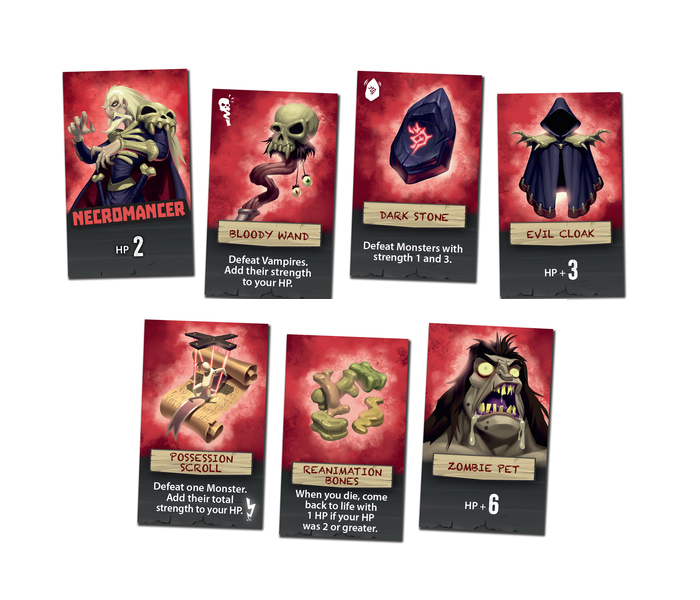
Welcome Back to the Dungeon is the stand-alone sequel to (wait for it) Welcome to the Dungeon.  The goal is to take one of four adventurers into a monster-packed dungeon and come out alive.  Each adventurer has six pieces of equipment, each granting a special ability (like slaying certain monsters or giving you Hit Points- HP).  But it's unlikely that they'll enter the dungeon fully prepared . . . for each round, players will bid on who enters the dungeon by successively adding monsters or removing equipment.  Will you press your luck and enter, or let someone else chance it?
one adventurer with associated equipment tiles (image from here)
Simplified Gameplay
The game is played over several rounds.  For each round, choose one adventurer with associated equipment tiles and lay him/her out on the table.  Each round has two phases:

1. Bidding phase
In the bidding phase, you either:
   a. Draw a card (from the monster deck) and look at it; put it face-down in the dungeon pile OR in front of you; if you do the latter, take an equipment tile of your choice and put it on top of the monster
   b. Pass your turn (you no longer participate in the round)

Once every player but one has passed, the phase ends.

2. Dungeon phase
The player who did not pass enters the dungeon, starting with the equipment and number of HP indicated by the remaining tiles.  Reveal a monster one at a time, defeat it if possible or lose HP equal to the monster's strength.  Continue until either there are no more monsters (congrats- you get a success card!) or your HP is zero.

Then the next round begins.  The monster deck is re-shuffled, a new adventurer is chosen (the same can be used repeatedly if desired), and play continues until one player has two success cards OR everyone but one dies (if a player dies twice, they're out).

Review
This game (and its predecessor) gets good reviews.  It's a press-your-luck game, pure and simple.  During the bidding phase, you have to try to make the dungeon hard by adding monsters or removing equipment (so others don't get an easy win), but not too hard (so you don't die, if you get stuck entering it).  You know only the cards you've placed in the dungeon, so finding the sweet spot is an educated guess.

Though it plays fast and is enjoyed by many, I prefer games with more depth and less 'gambling.'  Once the player is determined, they (probably) don't have a lot of options to defeat the monsters they encounter, which makes the bidding phase dominate the game (perhaps that's intentional).  More variety on the dungeon phase would improve this experience.

Rating: B-

Wednesday, April 12, 2017

Ultimate Werewolf


Today's game review is of the 2008 release, Ultimate Werewolf.  For 5-68 players (yes, you read that right), it plays in 30-90 minutes.

Overview
At its most basic, your goal is to be part of the last team standing.  One person must be moderator and run the game; the others are each dealt a card with a role (werewolf, villager, seer, or other roles).  This card is kept secret unless otherwise stated.  The goal for the werewolves is to achieve parity (equal number of werewolves & non-werewolves); the goal for the villagers is to hunt down and destroy all werewolves.  Who will prevail?

Simplified Gameplay
The game is played in sequences of 'night' and 'day.'  The moderator runs each aspect.

During the first night,
- all players close their eyes
- the werewolves open their eyes, look around, and close their eyes
- the seer opens his/her eyes, looks around, points to a player; the moderator secretly indicates to the seer whether that player is a villager or werewolf
- the seer closes his/her eyes
- all players open their eyes, and a day begins

During the first day,
- all players open their eyes
- without revealing roles, people debate and (eventually) choose someone in the village to kill

Of course, werewolves will try to convince the villagers to kill one of their own; villagers need to off a wolf.  Since roles are secret, this is a psychological game, and one entirely up to the players discussing.  The seer has inside knowledge, but can't come across as too confident, lest the wolves figure out who it is and kill him/her in subsequent nights (see below).  [Other roles, not discussed here, add further flavor and variety to the game.]  If more than half the players vote to kill someone, that person's card is revealed, and they sit the rest of the game out.

During subsequent nights,
- follow the aforementioned night procedure, with the addition that werewolves choose someone to kill after opening their eyes and looking around

During subsequent days,
- follow the aforementioned day procedure, with the addition that the role of the person just killed the previous night is revealed

Play continues until one group has met its victory condition.

Review
Two things make this party game unique: the number of players who can participate, and the largely unstructured nature of the game.  The latter has a strong psychological and personality-based component; the right group of people will have a blast, but timid or shy folks might find this game stressful.  Basically, the day phases make or break the game: someone generally kicks things off by accusing someone else of being a werewolf and seeing how they react.  The dynamics of the ensuing conversations could be hilarious or boring based on the group.

While I enjoyed the times I played this, I don't think it will remain in my collection.  It's best played with significant numbers- a rare situation these days, with young children.  And other party games- like Bang!- are, in my opinion, more entertaining and less psychological.  It's a good concept, overall, but not my favorite.

Rating: B-

Saturday, April 8, 2017

Elfenroads


The 2015 Elfenroads release is three games in one package: Elfenland, Elfengold, and Elfensea.  Today's review is of Elfenland.  For 2-6 players, it plays in 45-90 minutes.

Overview
You are a young elf about to undertake the rite of passage to adulthood.  Your goal: visit as many towns in Elfenland as possible.  The challenge: you'll have to use many different types of transportation (dragons, unicorns, giant pigs, elfcycles, magic clouds, ferries, rafts), as the roads connecting the towns cross varying terrain (plains, woods, desert, mountains, river/lake) and permit only certain 'vehicles'.  The card below shows which means of transport can cross which types of terrain, with associated costs to do so (for example, a dragon costs 2 cards to travel over woods, but 1 to travel over anything else).
taken from the rulebook, available here
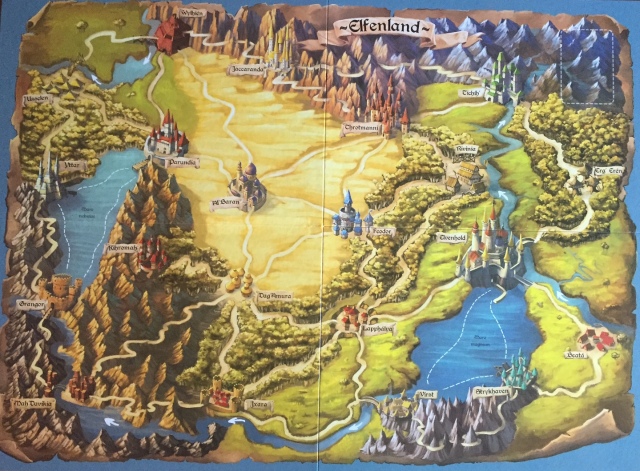
Since the goal of the game is visiting as many regions as possible, this game is all about efficient transportation.  You'll use Travel Cards to pay to use roads; the method of transportation allowed on a road (and thus, the type of Travel Card you'll need to pay) is determined by which Transportation Counter is on that road on a given turn (see the next section for more information).  You can't traverse a road at all if it doesn't have a Transportation Counter on it.

the game map; image from here

Simplified Gameplay
The game is played in three rounds, where each round has six phases:
taken from the rulebook
In a given round, each player takes turns and:
1. Draws 8 Travel Cards
    - in the first round; in subsequent, each player draws back up to 8
2. Draws a Transportation Counter and keeps it secret
3. Draws 3 more Transportation Counters and keeps them face-up
    - players can draw from the five face-up Transportation Counters or from the face-down pile
4. Plans Travel Routes by placing Transportation Counters face-up on roads
    - only one Transportation Counter can be on a road; this indicates what vehicle may use the road
    - Transportation Counters must be legally placed (example: a giant pig can't be on a desert road)
    - players are not obligated to place Counters; they can choose to pass
5. Moves his elf boot to as many cities as possible
    - players can traverse only roads that have Transportation Counters on them
    - players traverse roads by paying the appropriate type and number of Travel Cards
    - players can visit more than one city if they have the Travel Cards to pay for multiple roads
    - example: if a giant pig Transportation Counter is on a road in the woods, the player can traverse that road by paying (discarding) one giant pig Travel Card
    - when a player visits a city, he/she takes his 'town piece' from that city
6. Finishing the round,
    - turn in all unused Transportation Counters except one
    - remove all Transportation Counters from the board
    - the next round begins (go to phase 1), unless three rounds have been played

game in progress; image from here
The player with the most town pieces at the end of three rounds wins!

Review
I have mixed feelings.  The game is by Alan Moon, who later designed the excellent Ticket to Ride.  I see similarities between the two (goals, varying transportation flavors & costs).  Elfenland is a touch more restrictive than Ticket to Ride, and perhaps not as satisfying.  Your drawn Travel Cards are random, and some (or all) of your Transportation Counters are, too.  Since you must "match" them to travel, that amount of chance can leave you in a bind through no fault of your own (though to be fair, you can make use of opponents' Transportation Counters, so that can offset the problem).  And wow, can opponents destroy your chances by placing one simple obstacle.  The map and theme are fun, though, and despite my reservations, something does keep drawing me back to this game.  It's also neat to have two more games (Elfensea and Elfengold) in the box.  Ticket to Ride is better, but this is pretty fun, too.  The game rules can be downloaded here.

Rating: B+